Safe Sleep for Babies: What the Guidance Actually Says
The short answer
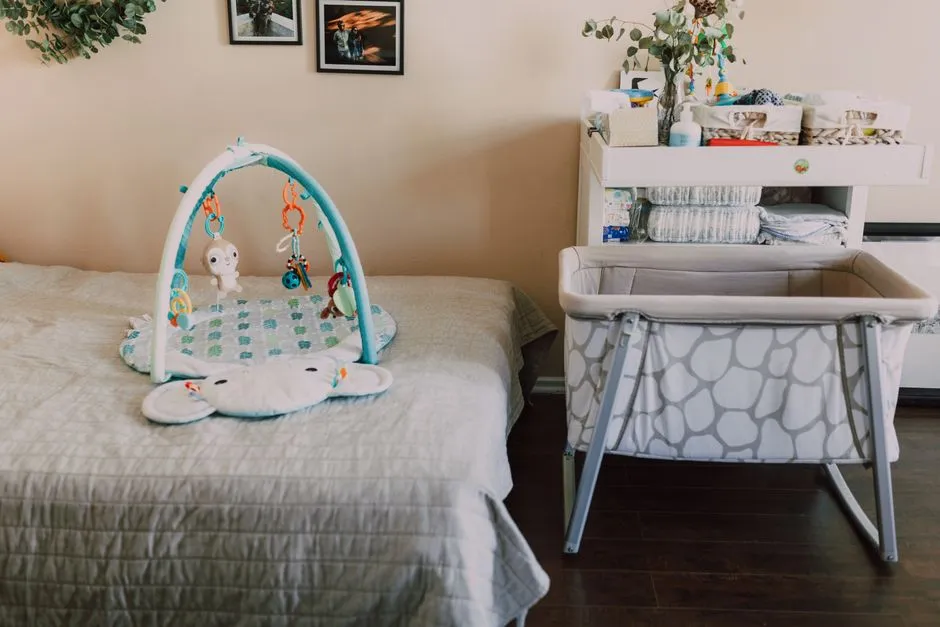
Put your baby on their back for every sleep, on a firm, flat, non-inclined surface, in their own sleep space in the room where you sleep, with nothing else in that space. The American Academy of Pediatrics states it without conditions. Its parent guide says "Put your baby on their back for all naps & at night." Its clinical Safe Sleep page tells families to "place infants on their backs for sleep in their own sleep space with no other people," to "use a crib, bassinet or portable play yard with a firm, flat mattress and a fitted sheet," and to "keep loose blankets, pillows, stuffed toys, bumpers and other soft items out of the sleep space."
When to get help now
The NHS (UK) page on reducing the risk of sudden infant death syndrome carries two urgent-advice boxes holding seven bullets between them. All seven are below, verbatim, each left in the tier the NHS puts it in. Nothing dropped, nothing moved to a calmer tier. Outside the UK, use your own emergency number for the first group and your own doctor or out-of-hours service for the second.
The NHS heading for the first group is "Immediate action required: Call 999 if:"
- "your baby stops breathing"
- "will not wake up"
- "your baby is struggling for breath"
- "your child is stiff, shaking or jerking (this may be a seizure or fit)"
- "your child's lips, tongue, face or skin suddenly turn pale, blue or grey (on black or brown skin this may be easier to see on the palms of the hands or the soles of the feet)"
- "your child is limp, floppy or not responding like they normally do (their head may fall to the side, backwards or forwards, or they may find it difficult to lift their head or focus on your face)"
The NHS heading for the second group is "Urgent advice: Get an urgent GP appointment or contact 111 if:"
- "you're worried about your baby or think they might be ill"
If you are worried about your baby right now, you do not need a reason that satisfies anyone. Call your pediatrician, your local out-of-hours service, or your emergency number. Trusting your instinct is the correct response.
Back to sleep, for every sleep
Most of what we publish lays out options and lets you choose. This page does not. Back sleeping is the recommendation for naps and for night, everywhere. The AAP's parent guidance is that "you should always place your baby to sleep on their back."
The exception people ask about is rolling: "if they're comfortable rolling both ways (back to tummy, tummy to back), then you don't need to keep turning your baby to their back again." You still put them down on their back every time.
Back sleeping pairs with awake tummy time. The AAP recommends increasing it "until your baby is doing at least 15 to 30 minutes of tummy time every day by the time they're 7 weeks old." That is awake, supervised time, not a sleep position.
Firm, flat, and not inclined
The AAP gives a test for firmness: "A firm surface means that it shouldn't indent when your baby is lying on it." And a number for incline: "Any surface that inclines more than 10 degrees isn't safe for your baby to sleep on."
The US NICHD Safe to Sleep programme describes the same surface: firm, meaning it "returns to its original shape quickly if pressed on," flat "like a table, not a hammock," level "not at an angle or incline," and "covered only with a fitted sheet." The 10 degrees is the AAP's alone. NICHD gives no degree figure.
Inclined sleepers have no safe version. In 2022 the AAP wrote: "The new federal Safe Sleep for Babies Act will help get rid of potentially dangerous baby sleep products such as inclined sleepers, in-bed sleepers, loungers and travel/compact sleepers by mid-2022." Any product that props your baby at an angle to sleep is outside the recommendation.
Their own sleep space, in your room
The AAP recommends "keeping your baby's sleep area in the same room (but not in the same bed) where you sleep for at least the first 6 months." The NHS gives the same period: "a separate cot or Moses basket in the same room as you for every sleep for at least the first 6 months."
On bed sharing the AAP is blunt: "the AAP doesn't recommend bed sharing with your baby under any circumstances." Its published figures: the risk of sleep-related infant death while bed sharing is "5 to 10 times higher when your baby is younger than 4 months," "2 to 5 times higher when your baby was born preterm or with low birth weight," and "more than 10 times higher for babies who bed share with someone who is fatigued or has taken medications that make it harder for them to wake up or has used substances such as alcohol or drugs."
Couches and armchairs
The AAP's starkest number: "The risk of sleep-related infant death is up to 67 times higher when infants sleep with someone on a couch, soft armchair or cushion."
The NHS makes it an instruction: "do not sleep on a sofa or in an armchair with your baby."
The dangerous moment is usually not a decision. It is a night feed on the sofa at 3am when you did not intend to sleep. What the AAP tells parents about night feeding is this, and only this: "If you bring your baby into your bed to feed or comfort them, place them in their own sleep space when you're ready to go to sleep." It names no safer surface to fall asleep on, so neither will we. Feed where you will not fall asleep.
Sitting devices are not sleep surfaces
If a baby falls asleep in one, the AAP is specific: "If your baby falls asleep in a car seat, stroller, swing, infant carrier or sling, you should move them to a firm sleep surface on their back as soon as possible." Its Safe Sleep page lists avoiding sleep "in a seating device, like a swing or car safety seat (except while riding in the car)." NICHD does not recommend these as a regular sleep or nap space either.
Nothing else in the space
The AAP names the soft objects and loose bedding it means: "pillows and pillow-like toys, quilts, comforters, mattress toppers, non-fitted sheets, blankets, toys, bumper pads or related products that attach to crib slats or sides."
Weighted products are an explicit no. The parent guide says "don't use weighted blankets, sleepers, swaddles or other weighted objects on or near your baby." The AAP's 2022 explainer adds weighted clothing, saying such items "are not safe and not recommended."
The AAP's home monitor line is an instruction, not a suggestion: "Don't use home cardiorespiratory monitors as a way to reduce the risk of SIDS," noting "there is no evidence that these devices, which don't have to meet the same requirements as medical devices, decrease SIDS risk."
Swaddling and rolling
Swaddling is not banned, and it is not protective either. The AAP's framing is "Swaddle your baby if you like. Just keep in mind that swaddling doesn't reduce the risk of SIDS." It then states three conditions, and all three matter. First, "make sure that your baby is always on their back when swaddled." Second, "the swaddle should not be too tight or make it hard for your baby to breathe or move their hips." Third, "when your baby looks like they're trying to roll over, you should stop swaddling them." The same passage adds "don't use weighted swaddle blankets or weighted objects like rice bags inside the swaddle."
On timing, the AAP says rolling "usually happens around 3 to 4 months, but it can happen earlier." The trigger to stop swaddling is what the baby looks like they are trying to do, not an age.
Pacifiers, overheating and smoke
The AAP says "try giving your baby a pacifier at nap time and bedtime," with three qualifiers in the same passage: "if your baby is breastfed, wait until breastfeeding is established before offering a pacifier," "if the pacifier falls out after your baby falls asleep, you don't have to put it back in," and "don't hang a pacifier around your baby's neck or attach it to their clothing when they're sleeping." The NHS advises parents to "think about using a dummy to settle your baby to sleep."
On overheating the two give different kinds of instruction. The AAP gives a dressing rule: "In general, you should dress your baby in only one layer more than you're wearing," and adds "don't put a hat on your baby while indoors once you're home from the hospital." The NHS pairs a warning with a temperature range in one bullet: "do not let your baby get too hot or too cold – make sure that your baby's room is between 16C to 20C". Not contradictory, but not the same instruction.
On smoke, the AAP states that "smoking while you're pregnant, and smoke in your baby's environment after birth, are significant risk factors for SIDS," and tells parents "don't smoke anywhere near your baby, even if you're outside," including "vaping and electronic cigarettes." The NHS bullet covers other people as well as you, and both halves of it are the instruction: "do not smoke when you're pregnant or around your baby after they're born, and do not let anyone smoke in the same room as your baby". Nobody smokes in that room, whoever they are and whoever's house it is.
Both name two more protective items. The AAP says "evidence shows that human milk reduces the risk of SIDS" and that "evidence suggests that infant vaccinations may help protect against SIDS." The NHS advises "breastfeed your baby if you can" and keeping your baby "up to date with their routine NHS vaccinations."
Where the guidance genuinely differs
On position, surface, room sharing and clearing the sleep space, the AAP and the NHS agree closely. On bed sharing they differ. The AAP does not recommend it at all. The NHS advises a separate cot or Moses basket in the same room, and names circumstances in which you should never share a bed, including if your baby was "born prematurely (before 37 weeks of pregnancy)" or weighed "less than 2.5kg or 5.5lb when they were born", and if you or your partner "smoke, drink alcohol or take drugs or medicine that makes you feel sleepy (drowsy)".
We quote that NHS material in part. The page also carries a "Co-sleeping more safely" section of six further instructions, not reproduced here because we do not recommend the practice. It is on the NHS page linked below.
We follow the AAP position, and name the NHS wording because you will find it. The AAP does not recommend bed sharing under any circumstances, and that is the line to act on.
What this page is
This is general guidance as written on the pages linked below, not advice about your baby. A baby with a medical condition, a preterm baby, or one given specific positioning instructions is a conversation with that clinician. If your doctor has told you something different, follow them.
Related baby-care guides
Continue with how much do babies sleep by age and tummy time how and when.
Sources
- How to Keep Your Sleeping Baby Safe: AAP Policy Explained, HealthyChildren.org (American Academy of Pediatrics), last updated 8 January 2026. Source for every AAP quote above except the six noted below, including the firmness test, the 10 degree limit, the bed sharing multipliers, the home monitor instruction, the swaddling passage with the rice bags sentence, and the pacifier qualifiers.
- Safe Sleep, American Academy of Pediatrics, dated 7 July 2025. Source for three of the four opening quotes: own sleep space with no other people, the crib, bassinet or play yard, and keeping soft items out. Also the seating device phrase. The "all naps & at night" wording is not here. It is credited above to the parent guide.
- Safe Sleep: Back is Best, Avoid Soft Bedding, Inclined Surfaces & Bed Sharing, HealthyChildren.org, published 21 June 2022. Source for two quotes only: the weighted clothing sentence ("are not safe and not recommended") and the Safe Sleep for Babies Act sentence. The rice bags sentence is not here. It is on the parent guide above, where this page credits it.
- Sudden infant death syndrome (SIDS): reducing the risk, NHS (UK), last reviewed 25 November 2025. Source for both help tiers with their headings and every bullet under each, the separate cot, the sofa and armchair instruction, the full smoking bullet, the temperature bullet, dummies, breastfeeding, vaccinations, and the bed sharing circumstances. UK guidance, UK routing.
- Safe Sleep Environment, Safe to Sleep, US National Institute of Child Health and Human Development, dated 8 November 2024. Source for the sleep surface description and the sitting devices sentence.
- Sleep-Related Infant Deaths: Updated 2022 Recommendations, Pediatrics, 2022. The underlying AAP policy statement, listed for reference. Retrieval returned HTTP 403, so no claim here is drawn from it.
Parents also ask
What if my baby rolls onto their tummy in their sleep?
The AAP says to always place a baby down on their back. If a baby is comfortable rolling both ways, back to tummy and tummy to back, the AAP says you do not need to keep turning them onto their back again. You still start every sleep on the back, and the sleep space still has nothing in it. Swaddling should stop once a baby looks like they are trying to roll over, and the AAP says that usually happens around 3 to 4 months but it can happen earlier. Rolling in sleep is not itself an emergency. What is an emergency is any of the six signs on the NHS call 999 list, and here is all six: your baby stops breathing, will not wake up, is struggling for breath, is stiff, shaking or jerking (this may be a seizure or fit), has lips, tongue, face or skin that suddenly turn pale, blue or grey (on black or brown skin this may be easier to see on the palms of the hands or the soles of the feet), or is limp, floppy or not responding like they normally do. If you see any of those, the NHS says call 999, and outside the UK call your emergency number now.
Are inclined sleepers or wedges safe if my baby spits up?
No. The AAP states that a firm surface means one that shouldn't indent when your baby is lying on it, and that any surface that inclines more than 10 degrees isn't safe for your baby to sleep on. In 2022 it noted that the federal Safe Sleep for Babies Act would help get rid of products such as inclined sleepers, in-bed sleepers, loungers and travel or compact sleepers. NICHD describes a safe sleep surface as firm, flat, level and covered only with a fitted sheet. If your baby is bringing up feeds or seems uncomfortable, that is a conversation with your doctor, who can assess your specific baby. Do not use an incline to manage it in the meantime. And do not wait for an appointment if any of the six signs on the NHS call 999 list appear, which are: your baby stops breathing, will not wake up, is struggling for breath, is stiff, shaking or jerking (this may be a seizure or fit), has lips, tongue, face or skin that suddenly turn pale, blue or grey (on black or brown skin this may be easier to see on the palms of the hands or the soles of the feet), or is limp, floppy or not responding like they normally do. Any one of those needs emergency help now. Call 999 in the UK, or your emergency number where you are.
How long should my baby sleep in my room?
The AAP advises keeping your baby's sleep area in the same room where you sleep, but not in the same bed, for at least the first 6 months. The NHS gives the same period, advising a separate cot or Moses basket in the same room as you for every sleep for at least the first 6 months. Room sharing means a separate sleep surface made for infants, such as a crib, bassinet or portable play yard, not your bed, and not a couch or armchair.
Is bed sharing ever recommended?
The AAP does not recommend bed sharing under any circumstances. It reports that the risk of sleep-related infant death while bed sharing is 5 to 10 times higher when a baby is younger than 4 months, 2 to 5 times higher when a baby was born preterm or with low birth weight, and more than 10 times higher when bed sharing with someone who is fatigued or has taken medications that make it harder to wake up or has used substances such as alcohol or drugs. The NHS takes a different approach. It advises a separate cot in the same room, names circumstances in which you should never share a bed at all, including if your baby was born prematurely before 37 weeks of pregnancy or weighed less than 2.5kg or 5.5lb when they were born, or if you or your partner smoke, drink alcohol or take drugs or medicine that makes you feel sleepy, and it also publishes a longer co-sleeping more safely section for parents who share a bed anyway, which we do not reproduce. Between the two, this site follows the more protective position: the AAP does not recommend bed sharing under any circumstances, and that is the line to act on.
What about falling asleep with my baby on the sofa during a night feed?
Do not feed where you might fall asleep on a sofa or armchair. The AAP reports the risk of sleep-related infant death is up to 67 times higher when infants sleep with someone on a couch, soft armchair or cushion, and the NHS instruction is not to sleep on a sofa or in an armchair with your baby. The only thing the AAP tells parents about night feeding is this: if you bring your baby into your bed to feed or comfort them, place them in their own sleep space when you are ready to go to sleep. Neither body names a safer surface to fall asleep on holding a baby, so we will not either. Feed somewhere you will stay awake, and put the baby back in their own cot, bassinet or play yard, on their back, before you sleep.
Independent guidance, not medical advice. We do not diagnose or recommend treatments or doses. For any concern about your baby, contact your pediatrician or local emergency service.