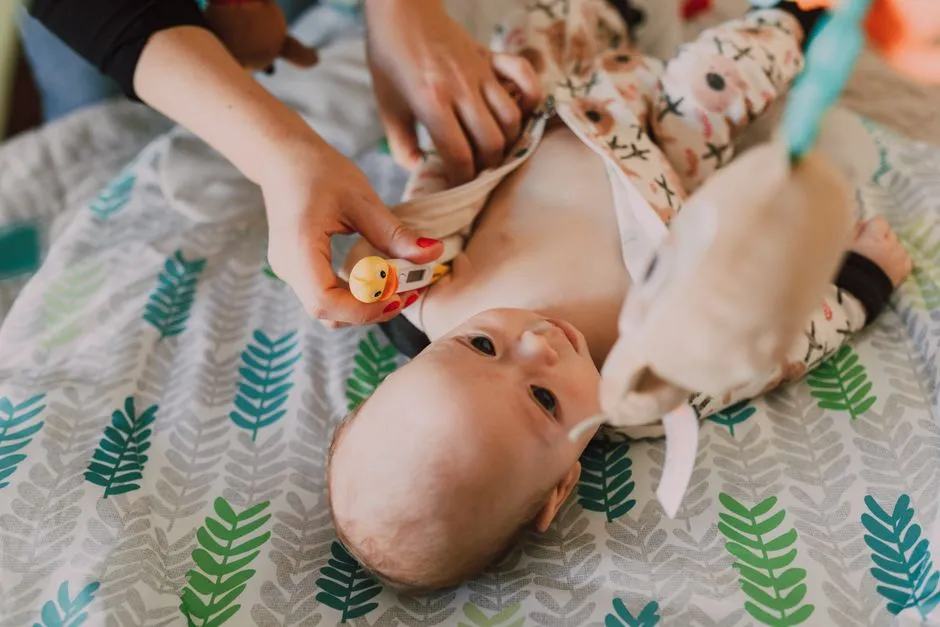
Newborn Physical Examination: The NHS Checks

What is the newborn physical examination?
The newborn physical examination is a clinician's check of your baby, including screening of the eyes, heart, hips and, where applicable, testicles. In England, it is offered within 72 hours of birth and again at 6 to 8 weeks. The NHS examination guide explains the appointments. This page explains general guidance. Your own clinician decides what an examination or result means for your baby, using their history.
When to get help now instead of waiting for a check
In England, call 999 or go to A&E if your baby:
- Has very fast or difficult breathing.
- Is difficult to wake or cannot be woken.
- Has a seizure.
- Is under 3 months old with a temperature of 38C or higher.
These are selected examples, not the complete emergency list, from NHS urgent-help guidance. That page also says to get immediate medical help when your child is unwell and you think something is seriously wrong. Call NHS 111 if you are worried about symptoms or do not know what to do. Do not wait for a scheduled examination.
If you are worried about your baby right now, you do not need a reason that satisfies anyone. Call your pediatrician, your local out-of-hours service, or your emergency number. Trusting your instinct is the correct response.
Which appointment are you being offered?
This guide describes England's pathway. It is not a timetable for every country. Ask your local care team which programme applies to your baby.
The examination is performed by a specially trained midwife, nurse or doctor. If you have not been offered either scheduled check, tell your midwife, health visitor or GP. These arrangements are described in the NHS physical examination page.
For your own notes, use the appointment's full name rather than writing only “baby check”. Add the service and location from the invitation. If the wording is unclear, a useful question is: “Which examination is this appointment for?” This is an organisation suggestion, not a test of whether your baby is well.
What does the examiner look at?
England's parent information on physical examination describes the following screening areas.
| Area | What the professional checks |
|---|---|
| Eyes | Their appearance. This examination cannot tell how well your baby can see. |
| Heart | Heart sounds, by listening to your baby's heart. |
| Hips | Whether the joints have developed and are working properly. |
| Testicles, where applicable | Whether they are in the right place. |
Your baby needs to be undressed for part of the examination. The professional also asks about general wellbeing.
This is a description of the appointment, not instructions for examining your baby yourself. Leave clinical examination and interpretation to the trained professional. You can ask them to explain what they are doing in ordinary language.
The parent leaflet says screening is recommended, and parents can choose any or all of its elements. Discuss questions or a decision not to have screening with your midwife and the professional offering it.
Does a screening result give a diagnosis?
Screening and diagnosis are different. The NHS overview of screening explains that a higher-risk, or screen-positive, result can lead to diagnostic testing. A screen-negative result does not promise that a condition can never develop. Screening can also miss a problem.
Use the result as the beginning of the clinician's explanation, not as a phrase to interpret through a search engine. “Screen positive” is not a diagnosis you should give your child. “Screen negative” is not a reason to dismiss a later concern.
The same NHS overview says questions about baby screening results can go to your midwife or health visitor. A useful question is: “What does this result mean, and is any further assessment needed?” Ask the professional to explain unfamiliar words rather than replacing them with a condition name yourself.
How will you get results and follow-up details?
The England parent leaflet says the professional gives the results straight away. If assessment is needed, the referral is discussed then. Further investigation may involve a hip ultrasound or a specialist team.
The NIPE programme handbook says parents should be told about the referral process and expected appointment timescales. NIPE means newborn and infant physical examination. The handbook is written for services and clinicians, not as a parent examination manual.
For a referral conversation, ask who will contact you, how they will do it, and whom to contact if the arrangement is unclear. Record the answer the service gives. Do not turn a general website's timeline into permission to postpone an appointment.
What if your baby is in special care or moves between services?
England has separate screening information for babies in special care units. It says physical screening waits until the baby is well enough and should take place before going home if you choose it. Your baby's healthcare team explains the timing and any further tests. This is not a decision a parent should make from the standard timetable.
For transfers between providers, the NIPE handbook assigns services responsibility for handing over unfinished screening and follow-up. Ask the receiving team which checks are recorded and whether anything remains outstanding. Moving hospital or moving area is not a reason to guess that an unfinished check has happened.
What should you keep in the red book?
The NHS health and development review guide describes the personal child health record, commonly called the red book. Take it to baby clinic and GP visits. It records important health information, and parents can add information too.
Keep appointment paperwork alongside the record in whatever practical arrangement you use. Our suggestion is to separate questions you want to ask from answers a professional has already given. That way, a question mark in your notes cannot accidentally become an assumed result.
For example, “Ask whether a referral was made” is a question. It is not the same entry as “Referral confirmed by the clinic”. Write down the clinic's actual answer when you receive it. This is a note-taking example, not a story about a real baby.
Why is there another examination later?
The NHS review guide describes the later physical examination, usually performed by a GP, including measurements of weight, length and head circumference. The NIPE handbook explains that some screened conditions can develop or become apparent after the newborn examination. The later check remains part of the pathway.
Our newborn basics section covers other early questions. The development section covers a different set of topics. Neither replaces appointments or assessment of your own baby.
A short appointment note you can use
This is our optional conversation aid, not an official NHS form or a home screening checklist. Leave a field unanswered until the relevant service answers it.
| Note heading | What to write |
|---|---|
| Appointment | The examination name and location from the invitation |
| My question | The question you want the professional to address |
| Explanation received | Their answer, without adding your own diagnosis |
| Next contact | The service and contact route they provide |
| Follow-up arrangement | The actual appointment or instructions given |
You do not need polished medical language to ask a question. You can say, “Please explain that word,” or “Please tell me what happens next.” The purpose of the note is to remember the conversation, not to decide whether a finding is important.
Avoid copying another family's results into your own record. Keep your baby's information separate from general reading. If someone else attends with you, you could ask them to help record the explanation while you speak with the professional.
Keep sleep arrangements separate from screening results
For every sleep, follow the American Academy of Pediatrics' safe-sleep guidance: place your baby on their back, in their own sleep space, on a firm, flat, non-inclined surface. Use only a correctly fitted sheet. Keep pillows, toys, loose bedding and other objects out. This is US AAP guidance, stated separately from England's appointment pathway.
Sources
All sources were opened and read on September 10, 2026. Only the relevant published guidance is summarised here.
- NHS: Newborn physical examination. Reviewed June 9, 2025. Timing, examiner and missed offers.
- GOV.UK: Eyes, heart, hips and testes. Updated June 3, 2026. England's parent leaflet, scope and results.
- NHS: Urgent medical help for babies and children. Reviewed August 6, 2026. Emergency and urgent routes.
- NHS: Screening. Reviewed July 30, 2024. Meaning and limits of screening.
- GOV.UK: NIPE programme handbook. Updated October 10, 2025. Follow-up communication and transfers.
- GOV.UK: Babies in special care units. Updated September 25, 2025. Individual screening arrangements.
- NHS: Health and development reviews. Reviewed November 30, 2023. Records and the later examination.
- AAP: How to keep your sleeping baby safe. Updated January 8, 2026. Sleep safety.
Parents also ask
Does a screen-positive result mean my baby has a diagnosis?
No. The NHS distinguishes a higher-risk screening result from diagnostic testing. Further assessment may be needed to establish what the finding means. Ask the professional who gives the result to explain the next step for your baby. Do not assign a diagnosis yourself from the screening label.
What if we have not been offered the examination?
The NHS says to tell your midwife, health visitor or GP if either scheduled physical examination has not been offered. Ask the service to check the record and explain the arrangement. Keep that administrative question separate from symptoms that need medical help now.
Does the standard timetable apply in special care?
England's special-care leaflet says physical screening is done when the baby is well enough and should take place before going home if you choose it. The healthcare team explains timing and any further tests. Do not decide to delay or request an examination yourself from a general age rule.
What should I ask when a referral is discussed?
Ask what the referral is for, who will contact you, what timescale the service expects and which contact to use if the arrangement is unclear. Record the answer you receive. This is an optional conversation aid, not a substitute for the team's clinical instructions or an appointment.
Can I use the appointment note as a home examination?
No. The note is only a way to organise questions and record what a professional tells you. It does not ask you to examine your baby's eyes, heart, hips or testicles. Keep clinical findings and their meaning with the trained examiner and your baby's own care team.
Independent guidance, not medical advice. We do not diagnose or recommend treatments or doses. For any concern about your baby, contact your pediatrician or local emergency service.