How to Choose a Stroller for a Newborn

Look for an explicitly approved newborn configuration
Choose a stroller for a newborn only when the exact manual approves the child's current size and developmental stage in the specific seat, bassinet, or compatible infant car-seat configuration. Do not infer newborn suitability from a deep recline, soft insert, large canopy, or a product photo.
Newborn is not a stroller feature toggle. Position, restraint, attachment, supervision, and the product's intended use all matter.
Read each mode separately
Record the conditions for every possible setup:
- stroller seat and permitted recline positions
- compatible bassinet or carriage attachment
- exact infant car seat and adapter combination
- seat direction and frame position
- required inserts supplied or approved by the maker
- child weight, height, age, and developmental criteria
Use the limits-and-labels method and confirm every part number. Never add head supports, padding, blankets, positioners, or adapters that the manufacturer does not approve for that mode.
Test attachment without the baby
Practice installing and removing the seat or bassinet on an empty frame. Confirm visual, tactile, or audible lock indicators exactly as the manual describes. Lift only at approved test points and never rely on a single click when the instructions require checks on both sides.
For a travel system, follow the compatibility checklist. A car seat that can be placed near a frame is not necessarily one that can attach safely to it.
Check position and visibility
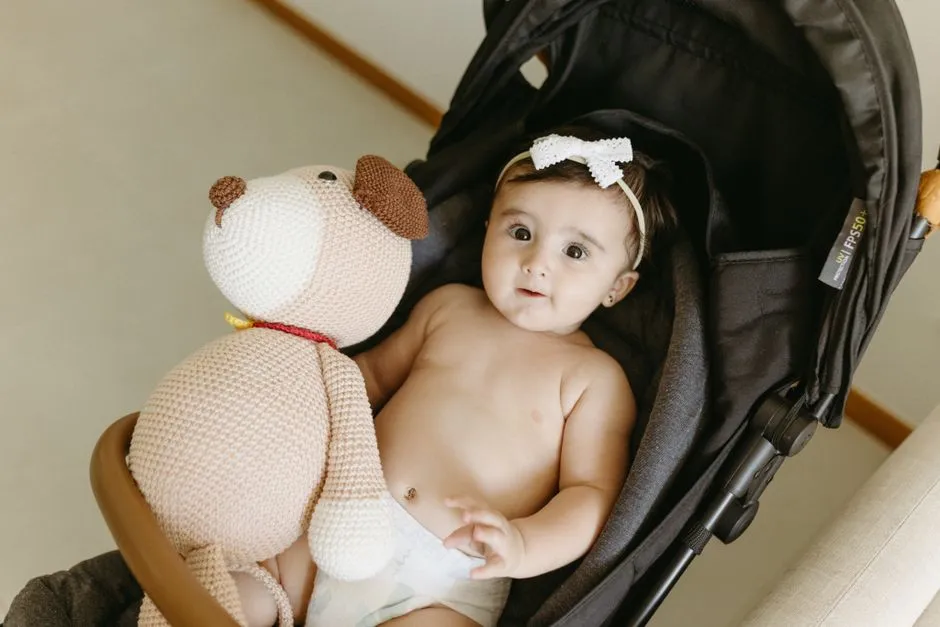
The harness or bassinet setup must fit and operate according to instructions. Keep the baby's face visible and airflow unobstructed. Canopies, rain covers, blankets, and toys must not cover the face or create an unapproved enclosure.
Ask the child's healthcare professional about prematurity, low muscle tone, breathing, reflux, hip, orthopedic, or other individual positioning concerns. Retail staff and general articles cannot assess medical fit.
Separate strolling from safe sleep
The American Academy of Pediatrics says sitting devices—including strollers, car seats, swings, carriers, and slings—are not recommended for routine infant sleep. If an infant falls asleep in a stroller or similar sitting device, move them to an appropriate firm, flat, non-inclined sleep surface as soon as safe and practical.
Use the sleeping-baby transfer plan before the first outing. Do not leave a baby unattended or loosen or partially buckle restraints because they are sleeping.
A bassinet attachment should be treated as a sleep space only when the manufacturer explicitly markets and approves that exact product and configuration for sleep and it meets applicable requirements. “Flat-looking” is not a safety standard.
Test the caregiver routine
With the stroller empty, practice brakes, harness, recline, fold restrictions, curb technique, doors, and vehicle loading. Some configurations must be removed before folding. Keep the baby in a separate safe place during every fold or assembly.
Check recalls, register each durable product, and inspect locks, restraint, wheels, and attachments before use. Stop for missing parts, damage, uncertain identity, or a setup that does not match both manuals.
The best newborn setup is not the plushest showroom nest. It is the documented configuration caregivers can attach, check, supervise, and transfer from correctly even after a very short night.
Sources
Parents also ask
Does a fully reclining stroller seat work for every newborn?
No. A deep or flat-looking recline does not establish newborn approval. The exact manual must permit the child's current size and developmental stage in that seat and position, with the required restraint and any approved insert. If the instructions do not clearly allow the setup, use another documented option and ask the child's healthcare professional about individual positioning needs.
Can a stroller bassinet be used for overnight sleep?
Only when the manufacturer explicitly identifies that exact bassinet and configuration as an approved sleep product and all instructions and applicable requirements are met. Do not assume any stroller attachment that looks flat is a safe overnight sleep surface. Follow current safe-sleep guidance and ask the manufacturer when the intended use or stand compatibility is unclear.
What should I do when my newborn falls asleep in the stroller?
The American Academy of Pediatrics advises moving an infant who falls asleep in a stroller or similar sitting device to an appropriate firm, flat, non-inclined sleep surface as soon as safe and practical. Keep restraints correctly buckled until the transfer, supervise, and never place the stroller seat or car seat on an elevated or soft surface.
Independent guidance, not medical advice. We do not diagnose or recommend treatments or doses. For any concern about your baby, contact your pediatrician or local emergency service.